
Leadership & governance
Leadership for institutional excellence
Guided by leaders spanning public policy, global business, process excellence, infrastructure, healthcare, banking, education, research, and digital transformation.
Who leads IPEC
Executive leadership & board of directors

Colonel Raj Kalra is the Founder Chairman of IPEC and the Founder & Chairman of Kuber Group Africa, headquartered in Accra, Ghana. He is an accomplished business leader, infrastructure developer, and former Indian Army officer with extensive experience executing large-scale projects across multiple sectors.
His notable achievements include the development of a 271-acre industrial park in Prampram, Ghana, and collaboration with the Government of Nigeria on a 200 MW photovoltaic solar power project. He earlier served as CEO of a leading cardiac healthcare institution, and headed Business Excellence at ABN AMRO Bank and the Royal Bank of Scotland, London.
Areas of expertise
Credentials & advisory role
Certified in Total Quality Management by the Japanese Union of Scientists and Engineers (JUSE), Tokyo. As Founder Chairman, guides IPEC's long-term institutional strategy, governance, international partnerships, and infrastructure initiatives.
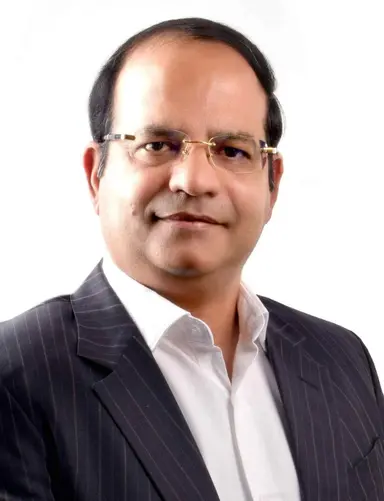
Brajesh Kumar Singh is a senior enterprise transformation leader with nearly three decades of experience advising organizations on business excellence, digital transformation, operational governance, and organizational capability development. His experience spans banking, BPM/BPO, telecommunications, aviation, retail, manufacturing, and consulting, with leadership responsibilities across more than 25 countries.
He has led initiatives delivering measurable operational improvements — significant efficiency gains through digitization and automation, enterprise-wide governance programmes, advanced analytics, fraud prevention, compliance systems, and business resilience.
Areas of expertise
Credentials
MIT (Chief Sustainability Officer; Applied Business Analytics) · Indian School of Business · Certified Corporate Director (IoD) · Certified Independent Director (IICA) · Six Sigma Master Black Belt · Certified Fraud Examiner · Lead Auditor (QMS, EMS, ISMS, OH&S, BCMS, PCI DSS).
DD
Deepak Dwivedi leads IPEC's Education Policy and Knowledge Innovation initiatives. With nearly 28 years of experience spanning economics, knowledge management, process excellence, research, and organizational capability development, he leads the Council's work on policy implementation, educational transformation, and interdisciplinary innovation.
He is the architect of the NEP 2030 Strategic Forum and originator of the Four Alpha Model — an interdisciplinary framework for holistic human and institutional development integrating economic capability, well-being, leadership, and self-development into measurable systems.
Current work
MD
MahaVidhya Dwivedi supports research, curriculum development, statistical literacy initiatives (SLiCE), educational content creation, and knowledge management projects while pursuing higher education in statistics and education.
How IPEC is governed
Governance framework
As a Section 8 not-for-profit, IPEC operates through a combination of statutory governance, executive leadership, subject-matter expert committees, and volunteer networks — built for transparency, accountability, and distributed leadership.
Process Excellence Committee
Dr. Rakesh Dwivedi
Chairperson
Behavioural Excellence Committee
Dr. Tosendra Dwivedi
Chairperson
Academic Excellence Committee
Dr. Sushannt Mysorekar
Chairperson
Knowledge Mgmt Excellence Committee
Dr. V. V. Rao
Chairperson
Healthcare Excellence Committee
Dr. Nandan Gijare
Chairperson
Global Diplomacy Excellence Committee
Dr. M. K. Vajpayee
Chairperson
Current committee members include Deepa Palaniappan, Dr. Chitra Kashyap, Dr. Asjad Usmani, Shruti Sharma, Farah Aqueel, and Deepak Gupta — with additional appointments announced as they are finalized.
Standardized structure
Every committee follows one model
Each of the six Excellence Committees is built on a consistent framework: one Chairperson, up to 12 Committee Members, and three functional Sub-Committees — ensuring consistency, accountability, and scalability nationwide.
Each committee — 1 Chair + 12 Members — operating through three functional sub-committees.
Curriculum sub-committee
Frameworks, learning outcomes, teacher manuals, and assessment metrics.
Excellence cells sub-committee
Establishes local operational cells inside schools, colleges, and universities.
Ambassador sub-committee
Builds a long-term network aiming for 1 million volunteer ambassadors per country.
Serve on a committee or sub-committee
IPEC is actively inducting members from academia, industry, healthcare, government, and civil society.
Apply to serve